
China's Industrial Reflation Does Not Reach the Consumer
394 words
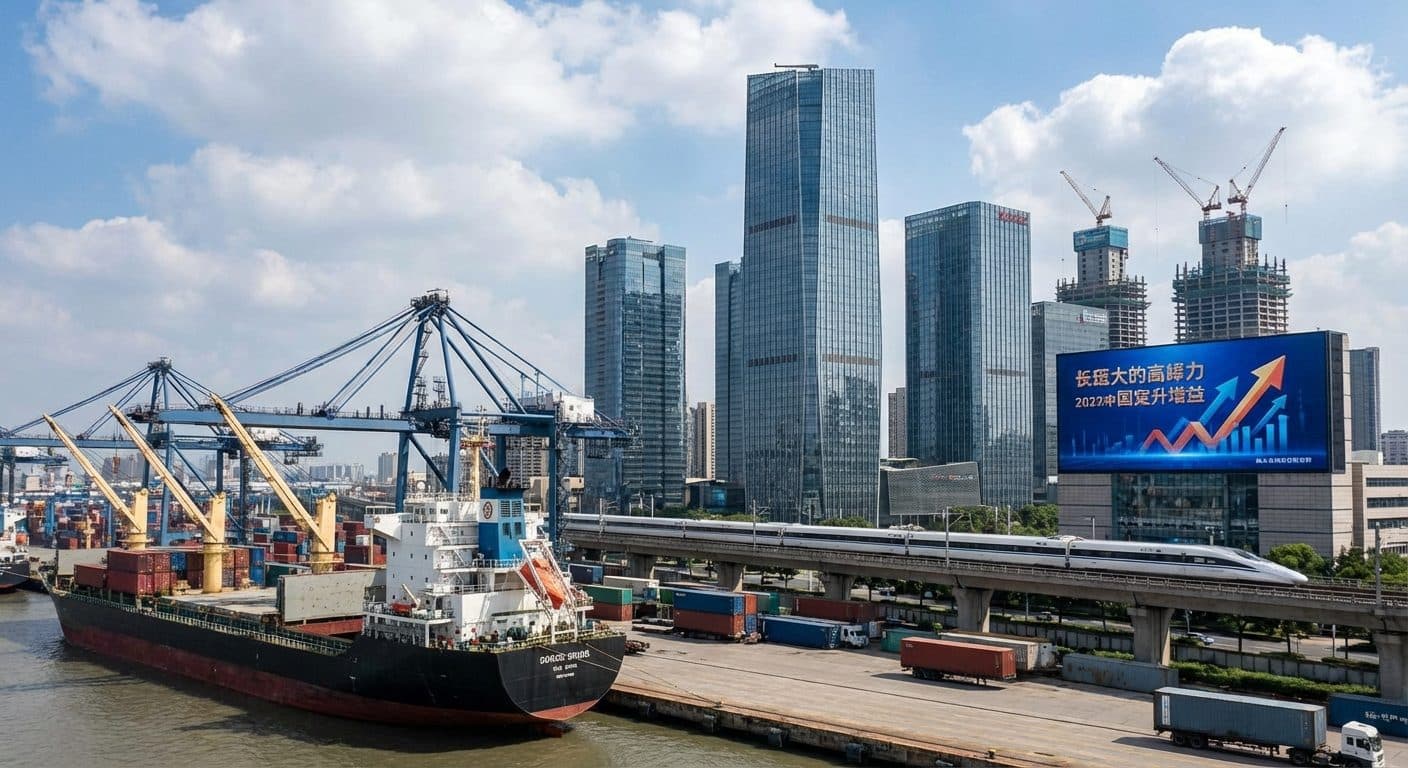
China's Industrial Reflation Does Not Reach the Consumer
China has left industrial deflation behind, but the price increase remains trapped upstream. The National Bureau of Statistics published on 10 August a producer price index up 3.5% year on year in July, after 4.1% in June, the highest reading since July 2022 1. In the same month, consumer prices rose just 0.5% 2. The gap measures precisely what fails to pass through: the margin stays with those who extract and process, and never reaches those who sell.
The detail of the statistical release confirms the mechanism. Mining and quarrying prices jumped 16.4% year on year, raw materials 6.1%, and the processing industry only 3.1% 1. The further down the chain, the more the increase exhausts itself. The move does not come from recovered final demand: it comes from capacity discipline imposed upstream, which tightens industrial supply without creating any pricing power for consumer brands.
The objection is serious: a producer price index driven by energy and metals is a cost shock, not healthy reflation. It holds for processors, who are indeed suffering margin compression. It does not hold for upstream producers, whose nominal revenue is recovering after three years of contraction. As a sign that the move runs out of momentum down the chain, the producer price index fell 0.7% in the single month of July 1.
The bottom line
Exposure to Chinese small caps shifts upstream: mining, metals, base materials. Consumer brands absorb higher input costs without the ability to pass them on, and their recovery will not come from this reflation. Index exposure gives little access to the winners: materials account for just 5.23% of the standard MSCI China Index as of 31 July, against 11.68% of the MSCI China A Index 34. The segment capturing the margin is precisely the one index exposure covers least.
What to watch: the gap between the two indices. If it closes because consumer prices rise, reflation becomes general and the upstream tilt loses its rationale. If it closes because producer prices fall back, capacity discipline will have given way.